
I have never read Burmese Days by George Orwell, but I was struck by the quote I found online. Orwell’s first novel, it describes “corruption and imperial bigotry” in a society where, “after all, natives were natives—interesting, no doubt, but finally…an inferior people”.
Inferior people? That was how imperial colonialists saw things in the past. This is how some Big Brother powers still see things today, perhaps. But why so, I wonder? What gives anyone the right to judge another civilisation, culture and people with their own moral stick, which is most probably a set of vastly different standards in the first place?
Having witnessed so many wonders of the world left behind by ancient civilisations of the past, I wouldn’t for the life of me have the audacity to “look down” on any country, much less the people of Myanmar whom I am beginning to see in a totally new light.
Today, I was to take a shared taxi from Hsipaw to Pyin Oo Lwin, a former British hilltop station. To be honest, I was not expecting to see locals – I thought I would be sharing the ride with fellow tourists. And I was naturally surprised to see the boot already full, though I did wonder if I should point it out when I was speaking to the tour agent, that I have luggage too. As always, a solution was easily found – one of the bags was thrown up the roof of the car! As long as it’s not mine, I thought to myself. Selfish? Yes, indeed. At least I thought better than to stuff my iPad and Macbook in my 50 litre backpack.
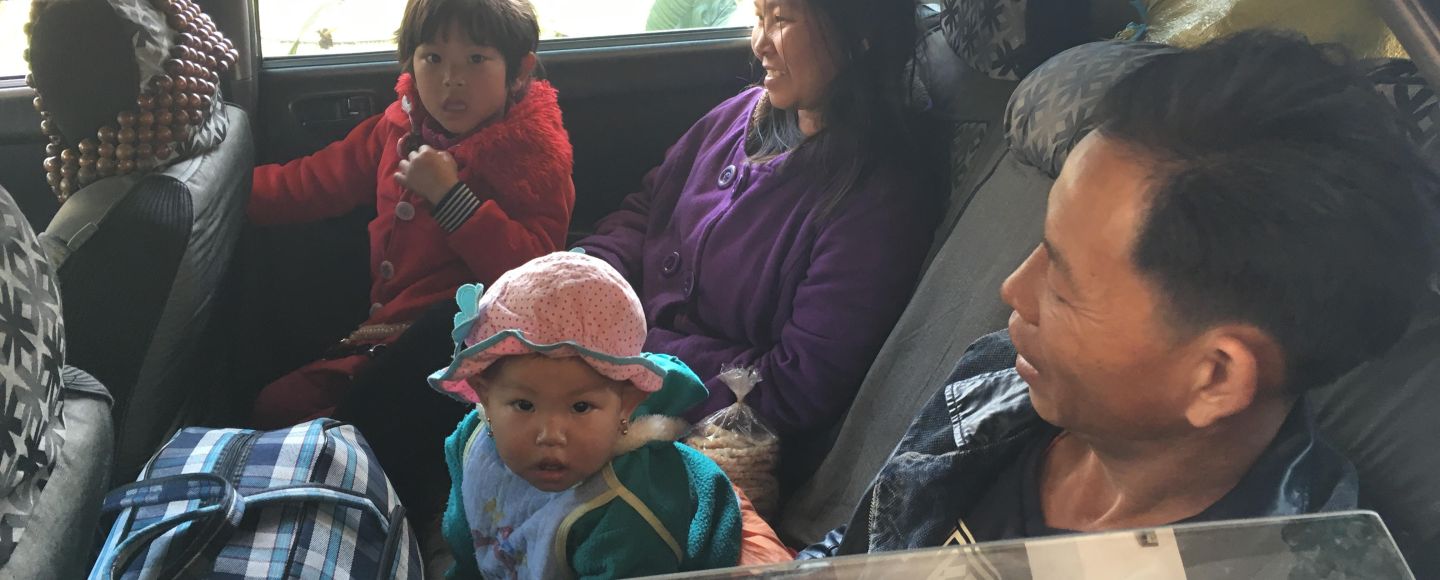
I glanced at the backseat – there was a family of four, a couple with two kids. Like all Burmese people, they were polite, shy and quiet – perfect people to share a journey with!
And what a ride it was. I absolutely adore how well it was planned by a non-English speaking driver (I really mean non-English speaking, not one word!). During the four hour journey, he stopped twice, once for breakfast after an hour into the trip, and another for lunch at around noon time. All the communication between us took place with sign language and “Do as Simon Does”. Driver points to breakfast coffee shop and sits down alone at one table while the accompanying family takes another.
Driver motions the coffee shop lady to come over to me who tries to ask for tea in English, only to be met with a laugh and something undistinguishable in Burmese of course to the benefit of all present. She then turns away. This is the beauty of the Burmese culture. If earning a couple of hundred or thousand kyats (equivalent of a couple of dollars US) is too complicated, why bother? Life goes on anyway. Compared to other countries where shop assistants will find all ways to communicate in order to sell their wares, tourists in Myanmar have to “earn” their food, tea and souvenirs. Thus is my experience in this country. It is up to me to hold up different bills in local currency to find out the cost of whatever it is I had my eye on. It is up to the buyer to make the first move, not the seller. After all, who’s the one in need here? Let’s get our priorities right, please!
In the meantime at the coffee shop, no one reacts to the scene they just saw and no one rises to help the poor lost and single damsel tourist in thirst and/or distress. I smile and decide to go back to my self-assigned seat to observe things before making another move. Still full from breakfast at the hotel, I decide against ordering another meal of local Shan noodles (made of glutinous rice) in the name of gluttony. My eyes went past the dried fruits on the left to rest upon a tub of what I thought to be dried prunes.
I signalled to the shop lady once again who shouts in Burmese for the price and I then saw a sign of live-saving grace – teabags hanging above thermos flasks of hot water. But of course, who needs a menu? Just point to Teh lah! I finally got my cup of hot and over-sweetened Burmese tea. The price? The nice shop lady holds up three fingers. Communication can be so direct and simple sometimes. Words do complicate matters at times, I feel.
The rest of the ride was uneventful. The family was unfazed even when I whipped out my Polaroid camera to take a photo of the daughter. But they did take care of me in their own way, by pointing me to the bathrooms, to the car etc. etc. At this point, I remember a passage I read in a Taiwanese travel guidebook about travelling in Myanmar:
As we looked at the full-to-the-brim tuk tuk and wondered how we were going to fit in, the local Burmese people onboard all moved instinctively to make space for us. In a modern day society where we all seek to guard the space allocated to us with all might and zeal, perhaps we should learn from the Burmese mentality of “squeezing a little to make space appear”. Such is the difference between people from societies with limited resources and those living in countries where no compromise is necessary thanks to the presence of ample affluence to go around.
With this thought in mind, that day in Burma ended when I finally reached my hotel in Pyin Oo Lwin, a former British hill station.
 A Singaporean Alien
0 comments on “Burmese days”